Data Centers: Where they are and where they're going
In This Section
CML Newsletter
Sept. 1, 2026
By Maeve McHugh, CML municipal research analyst
A recent study from NYU found that the vast majority of data centers are situated in metro-or micropolitan areas, leaving very few in rural communities. A big reason for this is the benefit of easy connection to existing infrastructure, specifically electricity supply. Colorado boasts 60 data centers, according to Data Center Map, where 59 of these centers are located in the urban corridor of the front range.
While we see this existing trend of data centers concentrated in urban areas, a shift is underway. An April study from Pew Research Center found that while the majority of currently operating data centers are found in urban areas, more than two-thirds of planned data centers will be in rural areas.
According to the NYU study, a good indicator of where future data centers will be sited are areas with existing infrastructure, and in many rural areas, these criteria overlap with sites formerly connected to the fossil fuel and coal industries. The Inflation Reduction Act established Energy Communities, a designation that directs tax benefits to projects that bring clean energy investment to areas with shrinking fossil fuel industries. The NYU study found that cities that overlap with Energy Communities are twice as likely to hold data centers. The double benefit of accessing legacy infrastructure and tax relief is an attractive reason to focus data center development in rural areas.
What remains to be seen is the impact on local communities, especially in rural areas. While rural data centers may have fewer immediate neighbors, they can still impact the electricity grid, water usage, noise, and local economies enough to be felt by nearby communities.
Data centers by the numbers
- 97.5% of the 4,283 data centers examined nation-wide are situated in metro- and micropolitan areas
- Colorado is home to 60 data centers (making us 22nd in the U.S., according to data in Data Center Map)
- 42% of the U.S. population lives within 5 miles of an existing or planned data center
Percentage of U.S. data centers in urban and rural areas
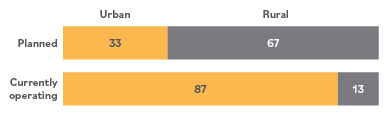
Source: Pew Research Center
Actions taken by Colorado cities & towns on data centers
- Alma: two-year moratorium
- Broomfield: 18-month moratorium
- Denver: one-year moratorium
- Hayden: allowed use in industrial-zoned areas with size and power consumption limitations
- Lochbuie: five-year moratorium
- Longmont: hyperscale center ban
- Monument: six-month moratorium
- Oak Creek: adopted a provision establishing permissive zoning
- Palmer Lake: six-month moratorium
- Paonia: one-year moratorium
- Woodland Park: 18-month moratorium